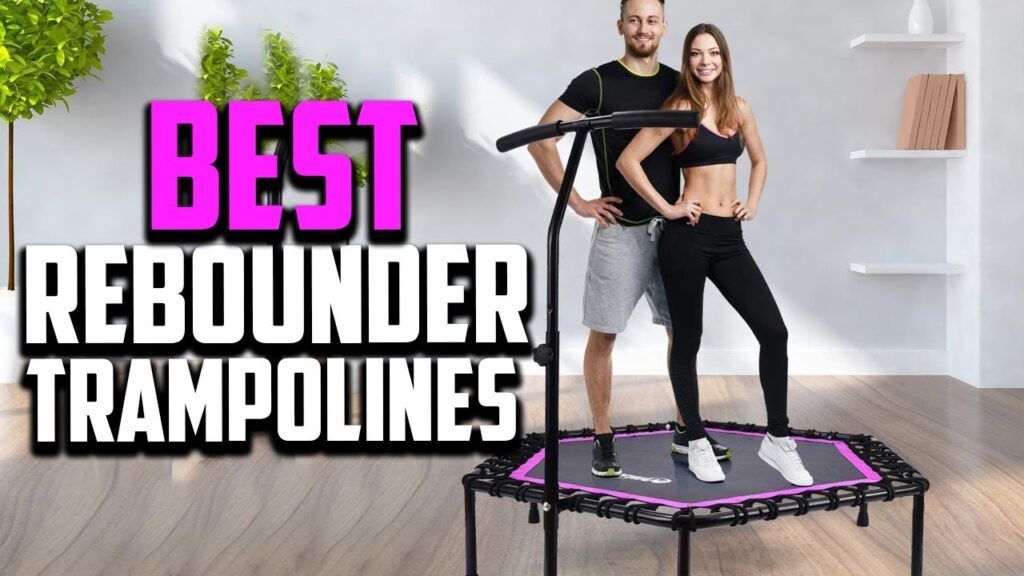

Looking for a low-impact way to make home cardio feel more doable? A rebounder, also called a mini trampoline, can help you add movement, rhythm, and variety to your fitness routine without the pounding of running.
This guide explains how bouncing sessions can support weight management, what to look for before buying, and how to start with simple beginner routines. You will also find safety tips, a buying checklist, and a realistic plan for using this equipment alongside strength training and sensible nutrition.
If you are still comparing models, start with our best rebounder trampoline guide before choosing a rebounder for weight loss.
What Is a Rebounder for Weight Loss?
A rebounder is a compact fitness trampoline designed for indoor exercise. Unlike a large outdoor trampoline, a rebounder usually has a firmer mat, a smaller frame, and a bounce that is controlled enough for cardio workout routines, balance training, and light interval training.
People often choose a rebounder for weight loss because it makes movement feel more playful. Instead of forcing yourself through another repetitive gym session, you can bounce, march, jog, twist, or perform trampoline exercises from home. That makes the workout feel fun and easy, especially for anyone who finds traditional cardio boring.
A rebounder does not magically remove body fat. What it can do is increase energy expenditure. In simple terms, you move more, raise your heart rate, and burn calories. Over time, that can support weight management when paired with a realistic weight loss plan.
Is a Rebounder Good for Weight Loss?
Yes, a rebounder can be good for weight loss if you use it consistently and match it with healthy habits. Rebounding is generally low-impact, so it can be easier to repeat several times a week than high impact exercise such as running or jump-heavy workouts on hard floors.
The American Council on Exercise sponsored research on mini-trampoline exercise and found that a structured mini trampoline workout could produce moderate-to-vigorous exercise intensity while participants perceived it as easier than the measured effort suggested. That matters because a workout you enjoy is easier to repeat. (ACE Fitness)
The best way to think about it is simple: rebounding helps with weight loss by making cardio more accessible. It can help you burn calories, boost your fitness, and stay active without the high impact that often discourages beginners.
The American Council on Exercise has reported that mini-trampoline exercise can reach a meaningful cardio intensity while often feeling less demanding than the effort measured. That is useful for beginners because perceived effort matters: when an activity feels manageable, it is easier to repeat consistently.
How Does Rebounding Help With Weight Loss?
Rebounding helps by combining cardio, coordination, and muscle engagement. When you bounce on a trampoline mat, your body works to stabilize itself. Your legs, hips, core, and smaller balance muscles all contribute to the movement.
A rebounder workout can also raise your heart rate quickly. Depending on the intensity, your calorie burn can vary. ACE-related reporting on mini-trampoline workouts found meaningful calories per minute during structured sessions, with intensity levels comparable to several common cardio activities. (Yahoo Finance)
Rebounding can help because it creates a small burst of effort again and again. A gentle bounce may work as a warm-up or cool-down, while a faster jog, high knees, or interval training block can burn more calories. More movement means more calories used, but the number of calories you burn depends on your body weight, fitness level, duration, and effort.
Although rebounding is mainly an aerobic exercise, it also asks several muscle groups to stabilize the body. The gluteus maximus, hamstrings, calves, hips, and core all help control each bounce. This does not replace strength training, but it can complement squats, lunges, and other simple resistance exercises in a balanced fitness plan.
Rebounder vs Mini Trampoline: Is There a Difference?
In everyday fitness language, “rebounder” and “mini trampoline” are often used for the same product. Both describe a small trampoline designed for indoor exercise. The difference is usually in intent: a rebounder is marketed more clearly as a fitness trampoline, while “mini trampoline” can describe both exercise and casual bouncing products.
For weight loss goals, choose a rebounder or mini-trampoline made for adult workouts. Look for a stable frame, strong legs, a high-quality mat, and either spring or bungee resistance. Bungee rebounders are often quieter and gentler on the joints, while spring rebounders may feel firmer and more responsive.
If your goal is a trampoline workout for cardio, do not buy a toy-style mini trampoline. You want a model designed for adult exercise, not occasional jumping on a trampoline for fun.
Not sure about the terminology? This rebounder vs trampoline guide explains the difference between fitness rebounders and larger trampolines.
How to Choose the Best Rebounder for Weight Loss
The best rebounder for weight loss is not always the most expensive one. It is the one that fits your body, your space, your fitness level, and the type of workout you will actually do.
Use this buying checklist before choosing:
| Feature | Why It Matters |
|---|---|
| Stability | A wider frame and anti-slip feet help you bounce with confidence. |
| Bounce type | Bungee cords are quieter and softer; springs are firmer and often cheaper. |
| Mat quality | A durable trampoline mat supports safer movement and better longevity. |
| Weight capacity | Choose a rebounder rated comfortably above your body weight. |
| Handlebar | Useful for beginners, balance concerns, or getting started with rebounding. |
| Noise level | Important if you live in an apartment or train early in the morning. |
| Storage | Foldable legs or a compact frame help if space is limited. |
| Warranty | A better warranty usually signals better build quality. |
If you are new to rebounders, a handlebar can help you feel secure while you build balance and coordination. As you improve, you may prefer a more open rebounder workout without the bar.
For most people, the right choice comes down to comfort and consistency. A quiet bungee model may be better for apartments or sensitive joints. A spring rebounder can feel firmer and may cost less. A handlebar is useful if you are a beginner, but advanced users may prefer more freedom for cardio moves and interval training.
Before buying, check the weight capacity, frame stability, replacement parts, warranty, and real user reviews. If the equipment feels unstable or noisy, you are less likely to use it several times a week.
If you want a broader buying guide, compare the best rebounder trampoline for adults before choosing a model for weight management.
If you are comparing premium options, our Bellicon vs JumpSport comparison can help you decide between two popular rebounder brands.
What Are the Best Types of Rebounder Workouts for Weight Loss?
The best rebounding workouts are the ones you can repeat safely. For most people, that means a mix of steady cardio, short intervals, basic trampoline exercises, and light strength training.
A steady cardio workout might include marching, basic bounce, side steps, and gentle jogging. This is good for weight loss beginners because it keeps your heart rate elevated without pushing too hard.
Interval training is more intense. You alternate short periods of faster effort with easier bouncing. For example, you might do 30 seconds of high knees followed by 60 seconds of easy bounce. This can create a high calorie burn, but it should be introduced gradually.
Strength training also matters. Rebounding burns calories, but building muscle supports long-term weight management. Add squats, wall push-ups, glute bridges, or light dumbbell work off the rebounder to train more muscle groups and help boost your metabolism over time.
Beginner Rebounder Workout for Weight Loss
This beginner rebounder workout is designed to be simple, safe, and realistic. Start with 10 to 15 minutes if you are new. Add more minutes of rebounding only when your body feels ready.
| Exercise | Time | Notes |
|---|---|---|
| Easy march | 2 minutes | Keep feet close to the mat. |
| Basic bounce | 2 minutes | Small controlled bounce. |
| Side-to-side step | 2 minutes | Keep knees soft. |
| Low jog | 2 minutes | Light cardio, not sprinting. |
| Knee lifts | 2 minutes | Engage core gently. |
| Low-impact jumping jack | 1 minute | Step out and in instead of jumping wide if you need a gentler option. |
| Easy bounce recovery | 1 minute | Breathe and reset. |
| Standing twists | 2 minutes | Controlled movement. |
| Cool-down march | 2 minutes | Slow the heart rate. |
This workout for weight loss is not about going as hard as possible. It is about creating a repeatable routine. If you can do it three to four times a week, you will get more benefit than doing one high-intensity session and then stopping for ten days.
Try This 20-Minute Trampoline Workout for Beginners
Once you feel comfortable bouncing on a mini trampoline, try this 20-minute trampoline workout. It combines cardio, rhythm, and short bursts of intensity without turning the session into a punishing routine.
Start with a 4-minute warm-up: easy march, basic bounce, shoulder rolls, and light side steps. Then move into the main section: 1 minute of low jog, 1 minute of basic bounce, 1 minute of knee lifts, 1 minute of side-to-side bounce, and 1 minute of easy recovery. Repeat that block twice.
Finish with 4 minutes of cool-down movement and gentle stretching off the rebounder. This is a great workout for beginners who want to burn calories and lose weight gradually, without the high impact of running.
To burn more calories, you do not need to jump higher. Often, better control, faster footwork, and longer consistency are more useful than aggressive jumping on the trampoline.
How Often Should You Use a Rebounder for Weight Loss?
A smart starting point is two to four sessions per week. Your ideal frequency depends on your fitness level, recovery, sleep, and other training.
Here is a simple weekly beginner plan:
| Day | Plan |
|---|---|
| Monday | 15-minute beginner rebounder workout |
| Tuesday | Walk or light mobility |
| Wednesday | Strength training |
| Thursday | 20-minute trampoline workout |
| Friday | Rest or easy walk |
| Saturday | Rebounder cardio workout + stretching |
| Sunday | Rest or cross-training |
This plan helps you incorporate rebounding into your routine without overdoing it. Cross-training keeps your body from relying on only one movement pattern, and strength training can help build muscle that supports fat loss and long-term fitness.
If you are very new to exercise, start with fewer sessions. If you already train often, rebounding can be added as a low-impact cardio option or warm-up.
For a broader look at rebounder fitness trampolines, see our fitness-focused rebounder guide.
Safety Tips Before You Get Started With Rebounding
Rebounding offers many benefits, but safety matters. Keep the rebounder on a flat surface, check that the legs are locked, and inspect the mat, springs, or bungee cords before use.
Start with small movements. Your feet do not need to leave the mat dramatically to get a cardio effect. A controlled bounce is safer than trying to jump high. Keep your knees soft, your core lightly engaged, and your gaze forward.
If you have balance problems, recent surgery, cardiovascular conditions, severe joint pain, osteoporosis, or are pregnant, ask a qualified healthcare professional before starting. Rebounding is generally accessible, but not every workout suits every body.
Wear supportive shoes if the mat feels slippery or if your feet need more structure. Some people prefer barefoot bouncing, but the best choice depends on your comfort and rebounder surface.
Common Mistakes to Avoid When Using a Rebounder for Weight Loss
The first mistake is expecting the rebounder to do all the work. Rebounding can help with weight loss, but it works best with nutrition, sleep, daily movement, and realistic habits.
The second mistake is jumping too hard too soon. Beginners often think high-intensity effort means better results. In reality, too much intensity can lead to soreness, poor form, or quitting. Build slowly.
The third mistake is buying the wrong rebounder. A cheap, unstable trampoline may wobble, squeak, or feel unsafe. If you want to use it several times a week, invest in a model with enough stability, weight capacity, and comfort.
Finally, do not ignore progression. Once a basic bounce feels easy, add variety: interval training, longer sessions, upper-body movement, or light strength training. That is how you continue to burn calories even as your body adapts.
FAQs About Rebounding, Calories, and Weight Loss
-
Does rebounding burn calories?
Yes. Rebounding burns calories because it raises your heart rate and increases energy expenditure. The exact calorie burn depends on your body weight, workout length, and intensity.
-
Can rebounding help you shed pounds?
It can support a plan to shed pounds, but it should not be treated as a shortcut. Rebounding helps with weight loss when it contributes to a consistent calorie-aware lifestyle.
-
Is rebounding better than running?
Not always. Running may burn more calories for some people, but rebounding is low-impact and gentle on the joints. For many beginners, that makes it easier to repeat.
-
Is a rebounder workout good for beginners?
Yes, if you start slowly. A beginner can start with marching, light bounce, and simple trampoline exercises before adding speed or interval training.
-
How many times a week should you rebound?
Two to four times a week is a practical range for many beginners. More advanced users may rebound more often, depending on recovery and overall training.
-
Can rebounding build muscle?
Rebounding can strengthen the lower body and core through balance and repeated movement, but it will not replace full strength training. Add resistance work if your goal is to build muscle.
-
Is rebounding fun and effective?
For many people, yes. It feels more playful than traditional cardio while still helping you boost your fitness and burn calories.
Key Takeaways
Choose a workout you can repeat three to four times, instead of pushing too hard once and stopping.
A rebounder for weight loss can support cardio, calorie burn, and consistency.
The best rebounder for weight loss is stable, durable, quiet enough for your space, and matched to your body weight.
Rebounding for weight loss works best alongside strength training and balanced nutrition.
Start with short, low-impact sessions before adding high-intensity intervals.
Bungee rebounders are usually quieter and softer; spring rebounders often feel firmer.
A handlebar can help beginners with balance and coordination.
Rebounding can help you reach your goals, but it should be part of a sustainable weight loss plan, not a quick-fix promise.

Community Coordinator
Linda Baker, our Community Coordinator, is the heart of our customer engagement efforts. With a background in social work and community management, Linda fosters a supportive and inclusive environment for all our rebounders.